

Why a Great Product Doesn't Protect Your Reputation: The Narrative Gap Explained
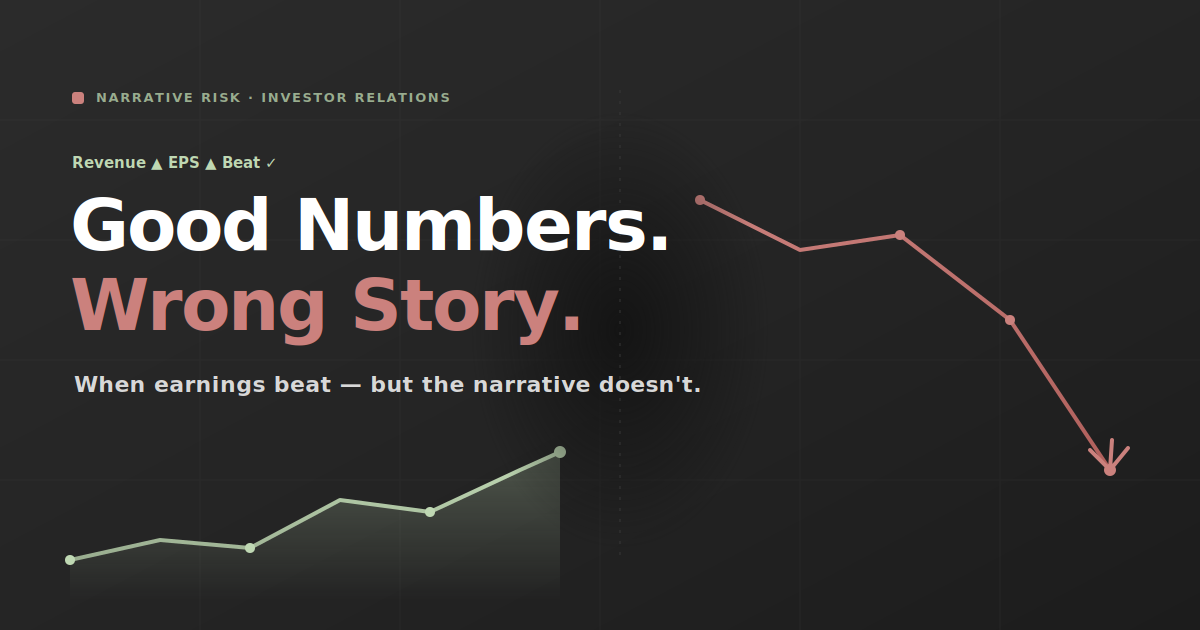
This is the mechanics of narrative gap. And understanding it may matter more than your next product launch.
What a Narrative Gap Actually Is
A narrative gap forms when a company's public communication — what it says about itself, its values, its product — no longer aligns with what the broader information environment says about it. Reviews, news coverage, social conversations, forum threads, and AI-generated summaries collectively construct a version of your brand. When that version contradicts your messaging, the gap opens.
The dangerous part: the gap doesn't announce itself. It accumulates. A cluster of unaddressed criticism here, an unmanaged media cycle there, a pattern of negative associations in search results that nobody tracked. By the time the internal team registers that "something feels off," external audiences have already settled on a narrative — and it isn't yours.
Why Advertising Makes It Worse
This is counterintuitive, but consistently observable: in a moment of systemic distrust, visibility amplifies skepticism rather than building confidence.
When a company intensifies advertising at the exact moment its online reputation is fragmented or negative, the effect often runs backward. A potential customer encounters the ad, gets curious, searches the brand — and immediately hits a wall of conflicting signals. Critical reviews surface. Old controversies reappear. The gap between the polished ad and the messy information environment doesn't go unnoticed. It registers as inauthenticity.
If what they find doesn't match what they were promised, the trust deficit deepens. Spending more on media in this context is essentially funding the discovery of your own narrative gap.
Get My Reputation Report
Reputation House is an international technology company for digital risk protection. We map how you appear across search, AI, and media and turn it into a clear reputation report.
Three Mechanics That Drive Narrative Breakdown
The Structural Problem with "We Have a Good Product"
Good product teams often resist reputation management as a priority because it feels like it belongs to the domain of spin or optics — things that matter when you have something to hide. This framing is the structural problem.
Reputation is not a reflection of product quality. It's a function of what the information environment amplifies, and that environment has its own logic. A company that handles a supply chain crisis badly will take a reputation hit regardless of whether its product is excellent. A company with mediocre search presence that lets uncontested negative reviews define its brand will lose to a competitor with a weaker product that controls its narrative better.
The market doesn't evaluate what you built. It evaluates the story it has access to about what you built — who's telling it, how consistently, across which channels, and whether it holds up under scrutiny.
What Narrative Management Actually Requires
Closing a narrative gap isn't about producing more content or increasing ad spend. It requires a systematic view of how your brand appears across the full information environment: search results, reviews, media coverage, AI-generated answers, and social signals — simultaneously and in relationship to each other.
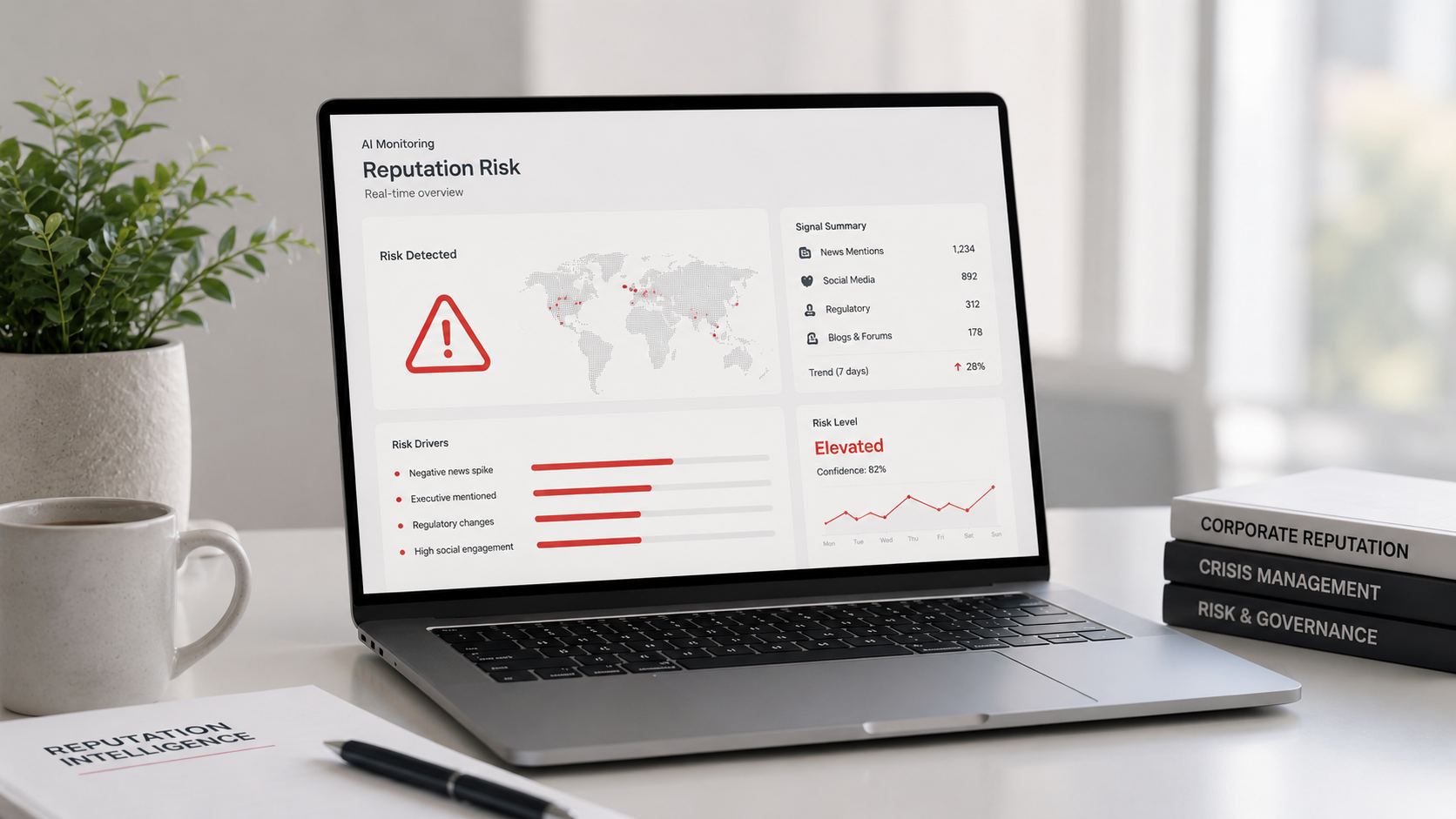
Rather than treating reputation as a reactive problem, an ongoing diagnostic shows where the narrative gap exists, how wide it is, which signals are driving it, and what the current risk exposure looks like. The underlying logic is monitoring and analysis before intervention — because you can't close a gap you haven't mapped.
The companies that navigate narrative crises well — or avoid them entirely — don't wait for the visibility. They've built systems to see the gap forming before it becomes the market's settled view.
Find out where your narrative gap stands today. Run a Risk Check at Reputation House and get a structured diagnostic of your brand's current information exposure.
Take Action
Know your reputation exposure before road show week
The management work has to happen upstream — in the 12 to 18 months before the offering. Run a structured reputation risk assessment now, and map what investors, analysts, and underwriters will find before they find it — while there's still time to shape the information environment.FAQ


Kristina joined Reputation House in 2022 as Account Director and moved through Operations to become COO before being appointed CEO in 2026. She drove the company's shift from a reputation agency to a technology-driven digital risk management platform. Her expertise spans operational scaling, technological transformation, and international business development in the reputation and digital risk space.