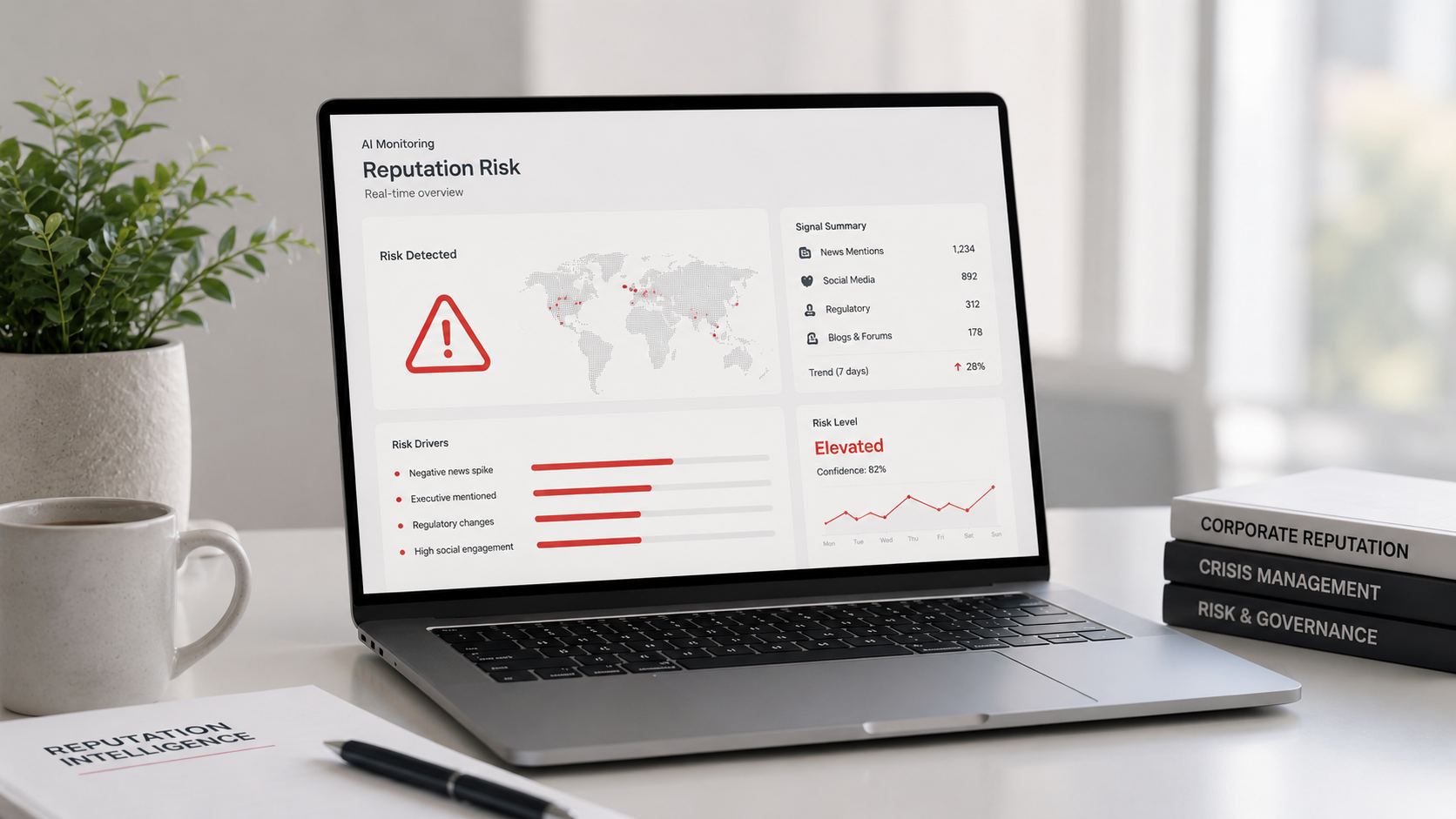

What Gartner's Market Guide for Reputation Monitoring Means for Your Brand
For any company still treating reputation monitoring as an informal, ad hoc practice, the implications are immediate and structural. Reputation risk has moved from a soft, PR-adjacent concern to something evaluated with the same rigor as cybersecurity, compliance infrastructure, or enterprise data governance.
Why Gartner Recognition Reshapes Enterprise Procurement
Gartner Market Guides don't create markets — they legitimize them. Once a category appears in Gartner's framework, enterprise procurement departments gain a standardized vocabulary, a set of evaluation criteria, and — critically — a shortlist logic. Vendors not represented in that framework are often excluded before a single conversation takes place.
This is not about prestige. It's about how large organizations make purchasing decisions. A procurement officer at a Fortune 500 company or a risk committee at a financial institution doesn't start vendor discovery from scratch — they work from Gartner frameworks, internal benchmarks, and peer comparisons. If your reputation monitoring provider isn't positioned within this newly defined category, the buyer may never reach you — regardless of your actual product quality.
The recognition of Reputation Health Tracking as a formal category signals that reputation risk is no longer treated as a soft, PR-adjacent concern. It is now evaluated with the same rigor as cybersecurity, compliance infrastructure, or enterprise data governance — at the level of annual security and risk reviews, not communications budgets.
The Criteria That Define the New Standard
When Gartner establishes evaluation criteria for a market guide, those criteria become the de facto requirements for enterprise shortlisting. Based on what the category recognition encompasses, buyers are likely to assess vendors across five dimensions:
These aren't aspirational features — they're threshold requirements. Vendors that can't demonstrate each of these capabilities are functionally absent from the conversation, regardless of how well they perform on any individual dimension.
Take Action
See how your brand maps against the new category criteria
Understanding where your reputation stands — and whether your monitoring infrastructure meets the standards enterprise buyers now expect — starts with visibility. Run a Risk Check to map your brand's current footprint against the new category criteria, and identify the gaps before your next procurement conversation does it for you.What "Not Being in the Field" Actually Costs
The phrase "automatic shortlist elimination" understates the commercial reality. In enterprise sales cycles, reputation monitoring decisions often happen at the level of annual security or risk reviews. If your organization — whether as a vendor or as a company evaluating vendors — isn't aligned with the Gartner framework at that moment, you either miss the procurement window entirely or enter a catch-up process that requires significant internal selling.
For brands evaluating their own practices: does your current solution meet the criteria enterprise procurement teams now apply? If you're relying on basic Google Alerts, fragmented social listening tools, or quarterly reputation audits, the answer is almost certainly no.
The market guide also introduces competitive pressure from an unexpected direction. As enterprise buyers adopt Gartner's framework, they begin benchmarking their vendors' monitoring sophistication against peer organizations. A competitor with a more structured, audit-ready brand monitoring practice gains a differentiation point that has nothing to do with product quality and everything to do with operational credibility.
This is the hidden cost: not a lost feature comparison, but exclusion from the shortlist before the comparison ever happens — and a credibility gap against peers that buyers now actively measure.
How to Position Before the Next Procurement Cycle
The recognition of Reputation Health Tracking as an enterprise category creates a specific planning window. Organizations that act before the framework becomes the universal default gain first-mover advantage in how they present their reputation infrastructure to clients, investors, and boards. The practical steps are straightforward:
Organizations that treat Gartner's category recognition as a planning trigger rather than retrospective validation enter the next procurement cycle with infrastructure already in place. Those that wait will find themselves explaining why their monitoring practice doesn't meet a standard that has, by then, become assumed.
FAQ

Kristina joined Reputation House in 2022 as Account Director and moved through Operations to become COO before being appointed CEO in 2026. She drove the company's shift from a reputation agency to a technology-driven digital risk management platform. Her expertise spans operational scaling, technological transformation, and international business development in the reputation and digital risk space.