


The era where reputation was viewed merely as a "soft" metric of brand affinity has ended. In the current landscape, digital perception has mutated into a critical operational liability. According to the World Economic Forum’s Global Risks Report, misinformation and digital vulnerabilities are now ranked among the most significant threats to global economic stability.
From Emotions to Digital Risk
This systemic shift underscores the core philosophy championed by Kristina Shinkareva, COO of Reputation House: reputation is no longer an emotion; it is a measurable digital risk. In 2026, a brand’s digital footprint is inextricably linked to its market valuation. When an unverified narrative can trigger a liquidity crisis or a sudden regulatory inquiry, reputation management is no longer a PR luxury — it is a fundamental security requirement.
Choosing an Online Reputation Management (ORM) partner is now a strategic procurement decision. You are not merely hiring a vendor to "clean up" search results; you are commissioning a defender for your organization's most valuable intangible assets. This guide defines the essential benchmarks for identifying a partner capable of navigating this high-stakes risk environment.
A defensive strategy is only as effective as the data behind it. A professional digital risk audit provides an objective baseline of your current exposure, identifying vulnerabilities before they can be weaponized in the public domain.
Criterion 1: Proactive Digital Risk Protection vs. Basic Monitoring
In 2026, the gap between simple "image management" and true "digital security" is vast. Market leaders no longer settle for teams that only track Google mentions after they appear. The priority has shifted toward Digital Risk Protection (DRP) — a system that identifies threats long before they reach a mainstream audience.
Traditional monitoring is fundamentally reactive; it signals a fire only once the smoke is visible. Proactive DRP, however, constructs a digital perimeter. It monitors the entire landscape — including dark web communities and specialized forums where disinformation or data leaks typically originate.
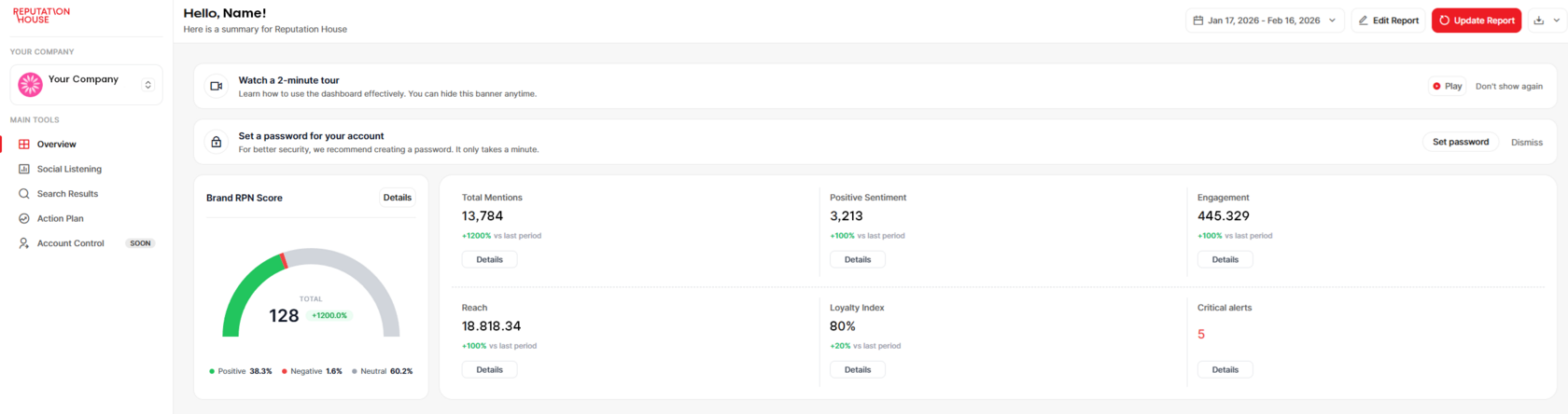
This high-level framework offers three specific benefits:
- Source Prevention: Identifying disinformation campaigns or data leaks at the point of origin.
- Deep Visibility: Monitoring hidden network segments that standard search-based tools cannot access.
- Risk Modeling: Utilizing predictive analytics to prepare for potential threats before they materialize.
Effective reputation management functions as an active defense, securing the brand’s digital footprint as a critical strategic asset.
Criterion 2: The Unified Ecosystem (SEO, PR, and Legal)
Fragmented defenses fail. The biggest weakness in the current market is that most agencies treat legal removals, PR, and SEO as separate universes. In a crisis, that disconnection is a liability. You cannot treat the symptoms (bad search results) without addressing the underlying risk structure.
Real Digital Risk Protection isn't a menu of services; it’s a single machine where technical SEO, narrative building, and legal action grind together.

When vetting a partner, check for deep integration across these three fronts:
- Strategic SERM (Search Engine Reputation Management): Stop thinking about "keyword pushing." That’s outdated. This is about engineering the search landscape. When your company hits a major target — like a 60% revenue jump or a top-tier industry award — a pro team ensures that specific fact anchors your Google presence. It becomes a digital barrier that suppresses negative noise automatically.
- High-Impact PR: You can’t defend a void. Defense requires a proactive story. Real protection is about building a "reputational cushion" through heavy-hitter media outlets. When the market gets turbulent, these authoritative features act as a stabilizer, keeping trust levels high even if other metrics wobble.
- Surgical Legal Action: Brute force doesn't work online. Sending cease-and-desist letters without a strategy often backfires, triggering the "Streisand Effect." You need a legal team that understands digital jurisdictions and knows when to use a scalpel instead of a sledgehammer to remove non-compliant content quietly.
Criterion 3: Transparency, Data-Driven KPIs, and Ethical Integrity
Let’s be honest: this industry is full of smoke. "Guarantees" are usually the biggest red flag. If a firm promises "100% removal of negative content," run. That isn’t a strategy; it’s a trap. It usually means they are using black-hat tactics that search engines will eventually penalize, leaving you in a worse spot than where you started.
Professional protection in 2026 isn't about magic tricks; it’s about transparency and hard data.
When you are vetting a partner, demand a reporting framework that ignores vanity metrics like "mention counts." You need to track what actually matters:
- Sentiment Velocity: It’s not enough to know what people are saying. You need to know how fast the narrative is moving. Is the negative sentiment accelerating across Tier-1 media? Expert dashboards track the trajectory and speed of these shifts in real-time, not just the static numbers.
- Search Real Estate (Visibility Index): Who owns the first page of Google? You, or your critics? A strategic DRP framework focuses on control. The goal is to ensure that verified, authoritative content anchors the search results, pushing the noise into irrelevance.
- Trust Benchmarking: Data from the Edelman Trust Barometer proves one thing: transparent communication is the only way to build resilience that lasts. We measure trust as a tangible asset, not a feeling.

Real experts don’t use bot farms. Period. Fabricated reviews create a liability time bomb. Instead, we lean on the "Halo Effect" — a psychological lever where legitimate wins (like innovation awards) naturally lift trust in other areas.
The Final Check: Before you sign, ask to see under the hood. If they can’t explain — in plain English — how their technical actions support your specific business goals, they are just a vendor selling a tool. You need a strategic partner.
Criterion 4: Industry Authority and Verifiable Global Growth
A firm’s standing in the market is more than just a marketing claim; it is a proof of concept. In the high-stakes sector of Digital Risk Protection (DRP), you should prioritize partners who demonstrate the same growth and resilience they promise to their clients. A company’s internal financial health is often the most honest indicator of its market trust.
When assessing authority, focus on two primary indicators:
- Global Recognition and Strategic Awards: Look for benchmarks that are validated by independent third parties. Prestigious honors, such as the Stevie® Awards, serve as a vital filter for quality. Being recognized for innovation or as a "Tech Company of the Year" confirms that the firm’s proprietary tools and methodologies are operating at an elite level.
- The "Halo Effect" in Practice: This psychological principle suggests that excellence in one area (like financial growth or technological innovation) naturally bolsters trust in others . A firm reporting significant growth provides tangible evidence that its strategies are effective and that global stakeholders are increasing their investment in that firm’s expertise.
Scale and Reach Digital risks do not respect borders. A partner with a global footprint and a presence in major tech hubs (like Dubai or London) is better equipped to handle cross-jurisdictional issues. Authority is also built through continuous education; the best firms contribute to the industry narrative through platforms like HackerNoon or high-tier business media, establishing themselves as thought leaders rather than just service providers.

Before moving forward, verify the firm’s recent track record. If a company cannot show its own trajectory of growth or a shelf of internationally recognized awards, it is unlikely to have the resources or the "clout" necessary to defend your brand against complex, multi-national threats.
Red Flags: What to Avoid When Choosing a Partner
In the reputation management industry, the line between strategic defense and dangerous manipulation can be thin. Selecting a firm that employs "black-hat" tactics doesn’t just waste your budget — it creates a permanent liability for your brand. According to FTC Guidelines on Deceptive Advertising, any attempt to distort public perception through fraudulent means can lead to severe legal and financial repercussions.
When vetting a potential partner, these five red flags should be deal-breakers:
- Unrealistic Guarantees of "100% Removal" Reputation is fluid and decentralized. Any firm promising the absolute deletion of all negative content is likely overpromising or using high-risk methods that violate the terms of service of major platforms. Ethical reputation management focuses on a sustainable "Halo Effect" — diluting negative narratives by anchoring the search presence with verifiable, positive authority .
- The Use of "Bot Farms" and Fabricated Reviews The short-term gain of fake positive reviews is never worth the long-term risk of a platform-wide ban. Major ecosystems like Google and Yelp have advanced AI detection for "review gating" and non-organic activity. Relying on fabricated endorsements is a breach of integrity that will eventually rebound, permanently tarnishing your brand image . Refer to Google’s Prohibited and Restricted Content Policy to understand the risks of non-compliance.
- A "Delete-Only" Mentality Aggressively hiding or deleting negative feedback instead of addressing it constructively is a recipe for mistrust . A professional partner understands that feedback is a resource for improvement. If a firm lacks a strategy for engagement and accountability, they are merely suppressing symptoms rather than managing the digital risk .
- Absence of a Crisis Communication Roadmap If a company cannot present a clear chain of command and pre-approved messaging templates for a crisis, they are not protecting you; they are reacting to you . Strategic DRP requires proactive simulations and a defined response strategy to prevent a minor issue from spiraling into a public disaster.
- Opaque Methodology and Hidden Terms A strategic partnership requires total transparency. If a firm is vague about its technical methods or includes hidden terms in its contracts, it poses a direct threat to your reputation. Professional firms provide a "look under the hood" at their proprietary technology and reporting metrics, ensuring their actions align with your corporate values.
Identifying these red flags is critical to protecting your organization’s future. Before committing to a long-term contract, ensure your potential partner’s methods are grounded in ethical integrity and technical excellence. A professional assessment of your current digital vulnerabilities can help you determine if a provider’s proposed strategy is built for resilience or just for show.
The Strategic Vetting Checklist: Questions for Your Potential Partner
Before committing to a long-term partnership, you must move beyond marketing presentations and probe the firm’s technical and ethical foundations. Use this checklist to distinguish between basic service providers and high-level Digital Risk Protection experts.
- Proprietary Technology: "How does your proprietary infrastructure identify coordinated disinformation campaigns before they reach the mainstream search results?"
- KPI Alignment: "Can you demonstrate how your 'Reputation Score' correlates with our specific business stability and investment attractiveness?"
- Ethical Integrity: "What is your firm’s protocol for adhering to global standards like the FTC Guidelines regarding non-deceptive communication and review integrity?"
- Crisis Infrastructure: "Will you provide a simulated Crisis Communication Roadmap, including a pre-defined chain of command and messaging templates for our industry?"
- Transparency: "Do you provide real-time dashboard access to track 'Sentiment Velocity' and 'Search Visibility' across all digital jurisdictions?"
- Authority Validation: "Can you provide verifiable evidence of your own company's growth and international industry recognition?
Hardening Your Digital Perimeter
In 2026, the cost of a damaged reputation is no longer measured in "bad PR days," but in lost market valuation, regulatory hurdles, and collapsed investor trust. As we have explored, transitioning from reactive "firefighting" to a proactive defense infrastructure is not just a trend — it is a strategic business necessity .
Your digital reputation is your most scalable and precious resource. Guarding it judiciously requires more than just monitoring; it demands a unified ecosystem of technology, SEO, and legal precision . By selecting a partner that manages reputation as a tangible digital risk, you ensure that your brand’s narrative remains under your control, fostering long-term resilience and sustainable growth.
Take the First Step Toward Resilience A defensive strategy is only as strong as its baseline data. Don't wait for a crisis to define your brand's future. Request a [Link: Comprehensive Digital Risk Audit] today to identify your vulnerabilities and secure your position in the global digital landscape.
FAQ: Strategic Insights into Digital Brand Protection
- What exactly does "Total Brand Protection" look like in 2026?
- Why should a business view reputation protection as a financial necessity rather than an optional PR cost?
- How do Social Listening tools actually influence a company’s broader business strategy?
- How is AI specifically changing the way we monitor and defend digital brands?
- What is the difference between simple "monitoring" and a dedicated "Digital Risk Protection" service?
- What criteria should an enterprise use to evaluate a reliable protection partner?
- How should we think about the costs and ROI of a professional reputation solution?