

Reputational Due Diligence in M&A: How Pre-LOI Standards Are Reshaping the Deal Market
Reputational due diligence has moved off the formal checklist and into the background research phase.
The question investors are now asking isn't "what did we miss?" — it's "what do we need to know before we show our hand?"
Why the LOI Is Already Too Late
A letter of intent signals commitment. Once it's signed, walking away carries legal, financial, and reputational costs for the acquirer. That's exactly why sophisticated buyers have pushed reputational screening upstream — to the moment when a target first appears on the radar.
The logic is straightforward: reputational risk doesn't expire. A CEO who weathered a harassment allegation in 2019, a supplier network with documented labor violations, a brand that built market share through misleading claims — none of these problems disappear because the company has since grown revenue or changed leadership.
Deal teams at major PE firms and strategic acquirers have adapted accordingly. Background checks on founders and key executives now run in parallel with initial financial screening, not after it. Sentiment mapping of the target's media presence, social footprint, and third-party review landscape happens before the first calendar invite goes out.
What Reputational DD Actually Covers
Traditional due diligence covers financials, legal exposure, and operational risks. Reputational DD occupies a different layer — one that standard legal review won't surface and financial audits won't flag. The core areas of modern reputational screening include:
Executive reputation is not just about criminal records or litigation history. It includes patterns: how a founder has publicly responded to criticism, whether past statements align with current positioning, how former employees and partners describe their working experience. A single viral thread from a former COO has killed acquisition interest before a pitch deck was reviewed.
What does the target's search landscape look like? Sustained negative press, unresolved controversies, or review manipulation patterns are all signals. The media footprint of a brand tells acquirers something the financials don't: what do customers, journalists, and the public actually believe about this company?
In regulated industries — fintech, healthcare, defense-adjacent supply chains — the reputational profile of a target's partners and vendors can create downstream liability for the acquirer. A clean balance sheet means little if the target's primary distribution partner is under sanctions scrutiny.
This includes everything from SEO manipulation patterns to fake review ecosystems to owned media that misrepresents product capabilities. These aren't just ethical concerns — they're disclosure risks that can unwind post-close if left undisclosed.
Get My Reputation Report
Reputation House is an international technology company for digital risk protection. We map how you appear across search, AI, and media and turn it into a clear reputation report.
The Signals That Actually Block Deals
Not every reputational flag is a deal-killer. Sophisticated acquirers distinguish between manageable risk and structural risk.
The threshold for what constitutes structural risk has tightened as market competition for quality assets increases. In a multi-trillion-dollar deal environment, there are enough alternative targets that an acquirer with reputational concerns can simply move on.
Why Reactive Reputation Management Backfires in M&A
Companies that discover reputational exposure during due diligence sometimes attempt to manage it on the fly — pushing positive content, accelerating review generation, issuing statements. In a consumer PR context, this can shift perception over time. In an M&A context, it does the opposite.
Sophisticated deal teams aren't evaluating current reputation in isolation — they're evaluating trajectory and response pattern.
A sudden spike in positive press or review volume coinciding with acquisition interest is itself a signal. It suggests the target is aware of exposure and attempting to paper over it rather than address it. That behavioral pattern is often more disqualifying than the underlying issue.
The acquirers who set the standards in today's market want to see reputational health that predates the deal process — not a reputation that was engineered for it.
Building Reputational Readiness Before the Process Starts
For companies that expect to be acquisition targets — or that plan to pursue acquisitions themselves — the strategic implication is clear: reputational monitoring needs to be continuous, not transactional.
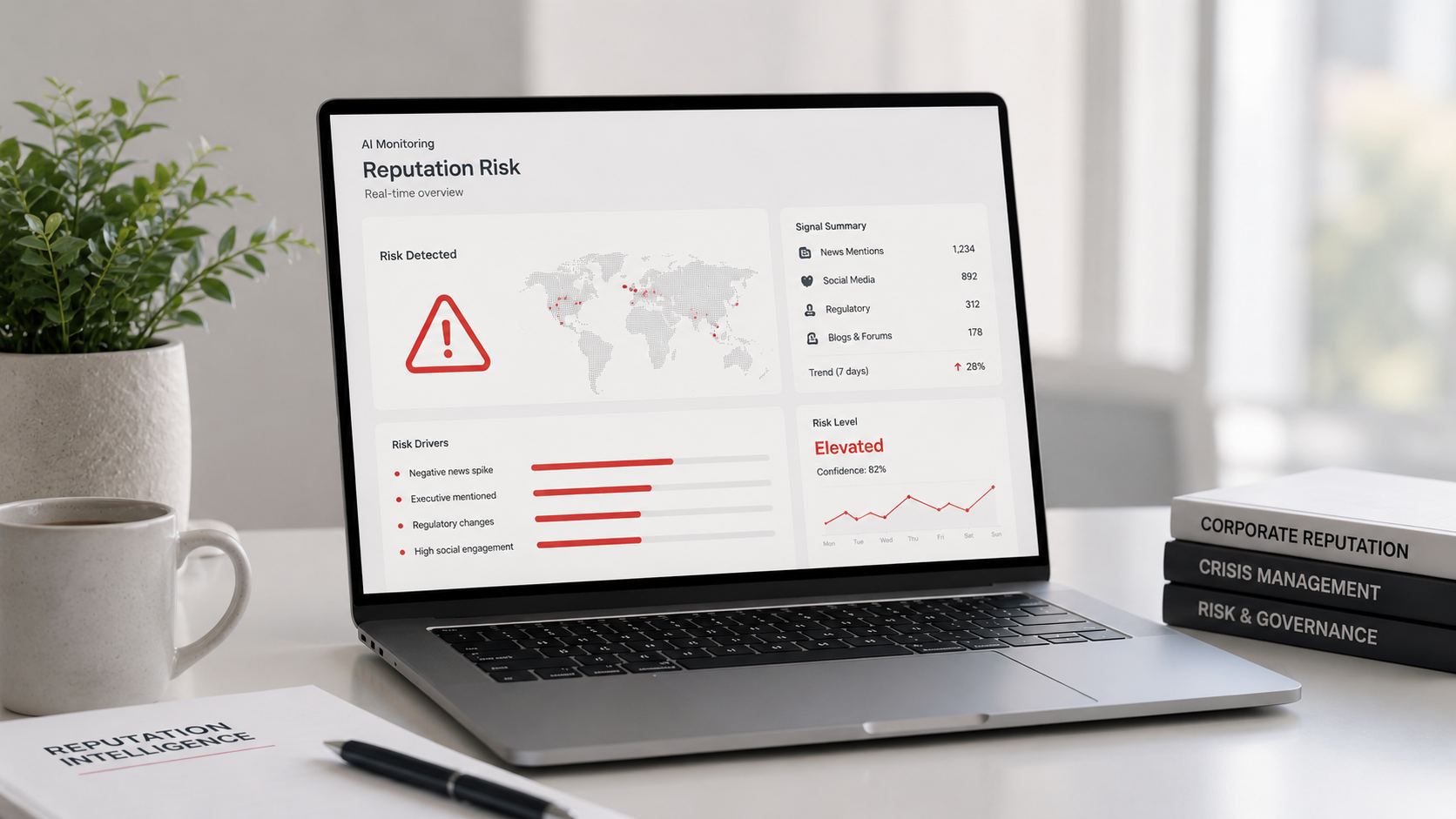
Tools like Reputation House's Risk Check are built for exactly this kind of continuous reputational monitoring — surfacing the signals that matter before they appear in someone else's due diligence report.
In a market defined by volume and competition for quality assets, reputational readiness isn't a pre-close formality. It's a prerequisite for getting to the table.
Understand your reputational exposure before someone else does. Run a Risk Check at reputation.house.
FAQ



Kristina joined Reputation House in 2022 as Account Director and moved through Operations to become COO before being appointed CEO in 2026. She drove the company's shift from a reputation agency to a technology-driven digital risk management platform. Her expertise spans operational scaling, technological transformation, and international business development in the reputation and digital risk space.