

The 26% Trust Gap Is a Revenue Variable, Not a PR Metric
That figure doesn't belong in a communications report. It belongs in a risk register.
What "26%" Is Actually Counting
This isn't a sentiment score or an NPS delta. The Edelman methodology tracks behavioral outcomes:
In B2B procurement, the effect compounds. A buying committee evaluating two vendors with comparable technical profiles will default to the one with a cleaner, more credible information footprint — consistently. The 26% gap is the aggregate commercial weight of that dynamic, priced into deal velocity, contract terms, and retention costs across an entire pipeline.
The loss is structural, not episodic.
Why This Belongs in the Risk Register
Most organizations assign trust to communications. Something goes wrong — a negative media cycle, a review spike, an inconsistent message — and the response is a statement, a rebrand, or a CSR initiative. These treatments share a common assumption: trust is an output, produced by saying the right things at the right moment.
The Edelman data reframes it as an input — a variable shaping commercial outcomes before the sales conversation starts.
That distinction changes organizational accountability entirely — and it's the core of treating reputation as an engineering system rather than a communications afterthought.
The stakes are most visible in M&A transactions, public listings, and large enterprise contracting. Counterparties in these processes conduct systematic reputation assessments. A company carrying degraded search results, unresolved review patterns, or fragmented digital signals across key platforms carries a quantifiable risk premium — one reflected in deal terms and financing costs whether or not the selling party has ever audited it themselves.
Get My Reputation Report
Reputation House is an international technology company for digital risk protection. We map how you appear across search, AI, and media and turn it into a clear reputation report.
How the Gap Accumulates
No single event creates a 26% performance disadvantage. It builds through patterns most companies never monitor closely enough to catch.
A brand's digital information profile — what surfaces in search, review platforms, news indexes, and social channels — shifts continuously. These forces all move it:
Companies that check their presence occasionally and react to problems after they surface are structurally always behind. Companies that monitor in real time and respond before problems compound maintain what Edelman's research consistently identifies as the trust tier's defining characteristic: signal clarity.
Signal clarity
When someone researches a company before a major decision, signal clarity means the information landscape returns a coherent, credible picture. Not the absence of criticism — coherence. A recognizable identity, responsive behavior, consistent positioning across every touchpoint where buyers form opinions.
That coherence doesn't maintain itself. It requires systematic visibility into how a brand is being perceived, where gaps exist, and how signals are shifting — not quarterly, but continuously.
The Diagnostic Question Most Companies Avoid
The instinct is to assume the answer. Most leadership teams that believe their company has a strong reputation have never formally audited it. They're operating on internal perception — which is exactly the condition under which a 26% competitive gap develops unnoticed.
It isn't whether your brand feels well-regarded internally. It's whether you have the instrumentation to know where your trust profile currently sits, which signals are working against you, and what your competitive exposure looks like across the digital surfaces where buyers are actually forming judgments.
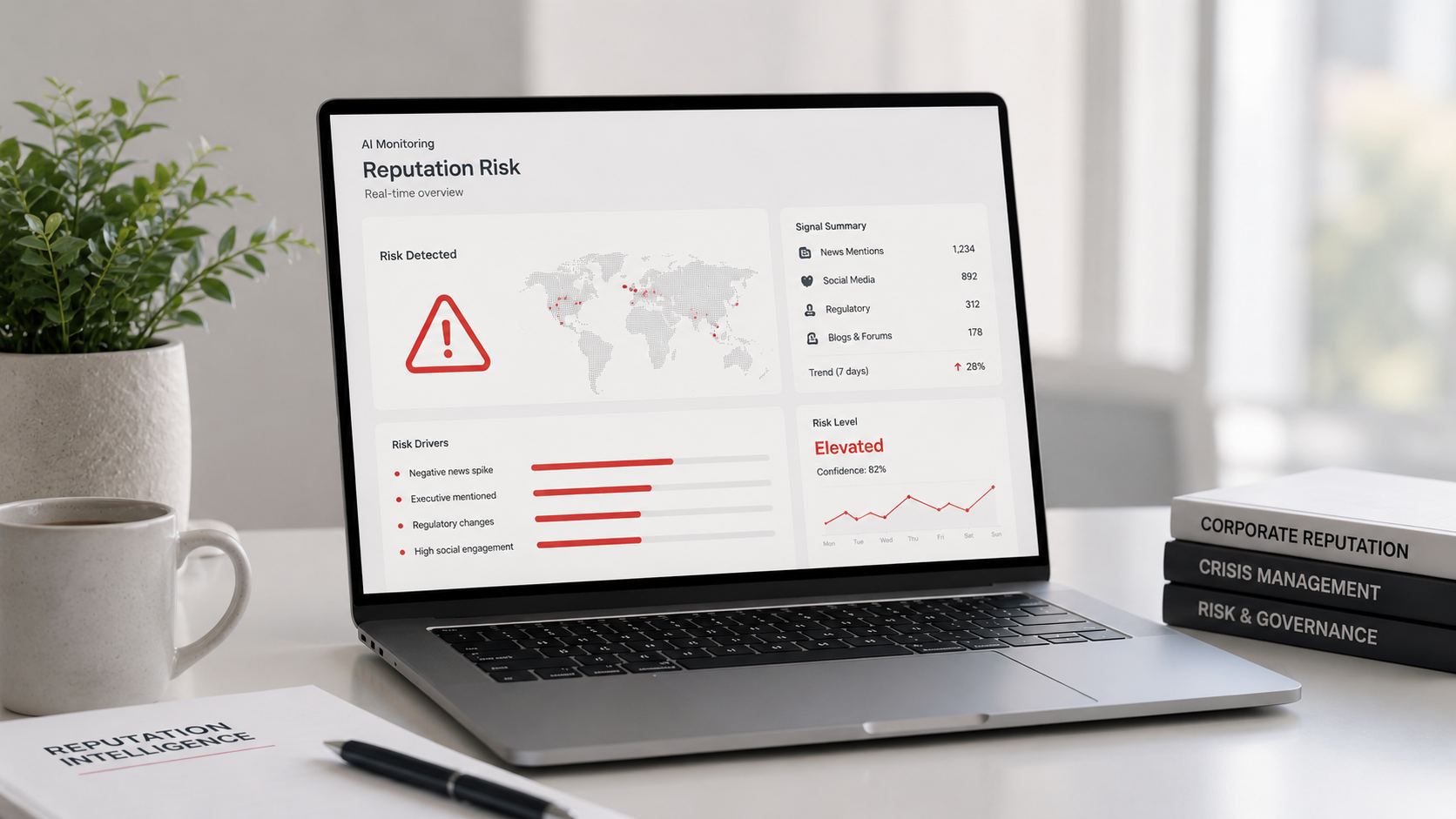
In 2026, measuring brand trust means tracking it in the same environment where your buyers, investors, and partners are building their views — not through periodic surveys, but through continuous monitoring of the real information landscape.
The 26% gap isn't a warning about reputation in the abstract. It's a measurement of what companies that treat trust as infrastructure gain over those that treat it as damage control.
Find out where your company sits. Run a Risk Check at Reputation House and get a structured assessment of your current trust signals, the gaps affecting your competitive position, and where your brand's information profile creates measurable commercial exposure.
Take Action
Know your reputation exposure before road show week
The management work has to happen upstream — in the 12 to 18 months before the offering. Run a structured reputation risk assessment now, and map what investors, analysts, and underwriters will find before they find it — while there's still time to shape the information environment.FAQ


Kristina joined Reputation House in 2022 as Account Director and moved through Operations to become COO before being appointed CEO in 2026. She drove the company's shift from a reputation agency to a technology-driven digital risk management platform. Her expertise spans operational scaling, technological transformation, and international business development in the reputation and digital risk space.