

Real-Time Brand Reputation Monitoring: Online Reputation Management Tool & Guide (2026)
Most tools promise instant alerts. Fewer can actually answer what matters: when a signal appears, how quickly can someone act on it?Real-time brand reputation monitoring is the continuous, around-the-clock tracking of brand signals across search, AI, media and social, and reviews — with alerts triggered the moment a meaningful change appears, so the gap between a signal and a response stays as short as possible.
Why Real-Time Online Reputation Monitoring Matters: Brand Reputation Management in 2026
Most reputation damage builds slowly — but when it moves fast, the response window is everything. A coordinated complaint, a viral post, a sudden negative review cluster: each compounds while it goes unanswered.
The stakes are higher now because decisions happen fast and in private. Per Gartner, 61% of B2B buyers form their view from independent research before ever speaking to a vendor. By the time a prospect reaches you, they've already decided what they think — shaped by search results, online reviews, and increasingly by what AI assistants say about your brand.
Online reputation management is no longer just about crisis PR. It's about controlling the decision environment before someone engages.
That's why the right online reputation management tool needs to cover more than social. Brand mentions surface across news sites, review platforms, AI-generated answers, and forum threads. A tool that monitors social media while leaving search and reviews unchecked gives you half the picture at best.
Get My Reputation Report
Reputation House is an international technology company for digital risk protection. We map how you appear across search, AI, and media and turn it into a clear reputation report.
What 24/7 Brand Reputation Monitoring Actually Means
Around-the-clock coverage is the honest core of "real-time." Reputation doesn't keep office hours — a thread can build overnight, a review can post on a weekend, an AI description can shift any time its sources change.
The useful question is not "how many seconds until a mention reaches the dashboard," but "how current a picture can the system assemble at any moment." That framing keeps real-time honest — and is what separates dependable reputation tracking from a marketing claim.
No system catches everything the instant it appears; different sources index at different speeds. A credible real-time capability is continuous, fast on signals that matter, and transparent about where coverage is strong and where it lags.
How Real-Time Brand Monitoring Works: Core Components
Underneath the alerts, real-time monitoring is mostly about detecting meaningful change quickly. The core components:
Reputation Tracking Across All Surfaces
Effective reputation tracking can't stop at social media monitoring. Online reviews, branded search results, news coverage, and AI-generated descriptions all shape how your brand is perceived. Monitoring social media posts while ignoring search means you catch complaints but miss the moment they start influencing purchasing decisions.
Improve Your Brand Image: Practical Ways to Make Real-Time Monitoring Work
Brand image isn't built in boardrooms — it's shaped by what people find when they look. Practical ways to make real-time monitoring work rather than just make noise:
What to Look For in a Real-Time Online Reputation Monitoring Tool
Most tools advertise real-time alerts. The ones that actually deliver tend to share a few qualities. Weigh any reputation monitoring tool or service on what makes real-time useful:
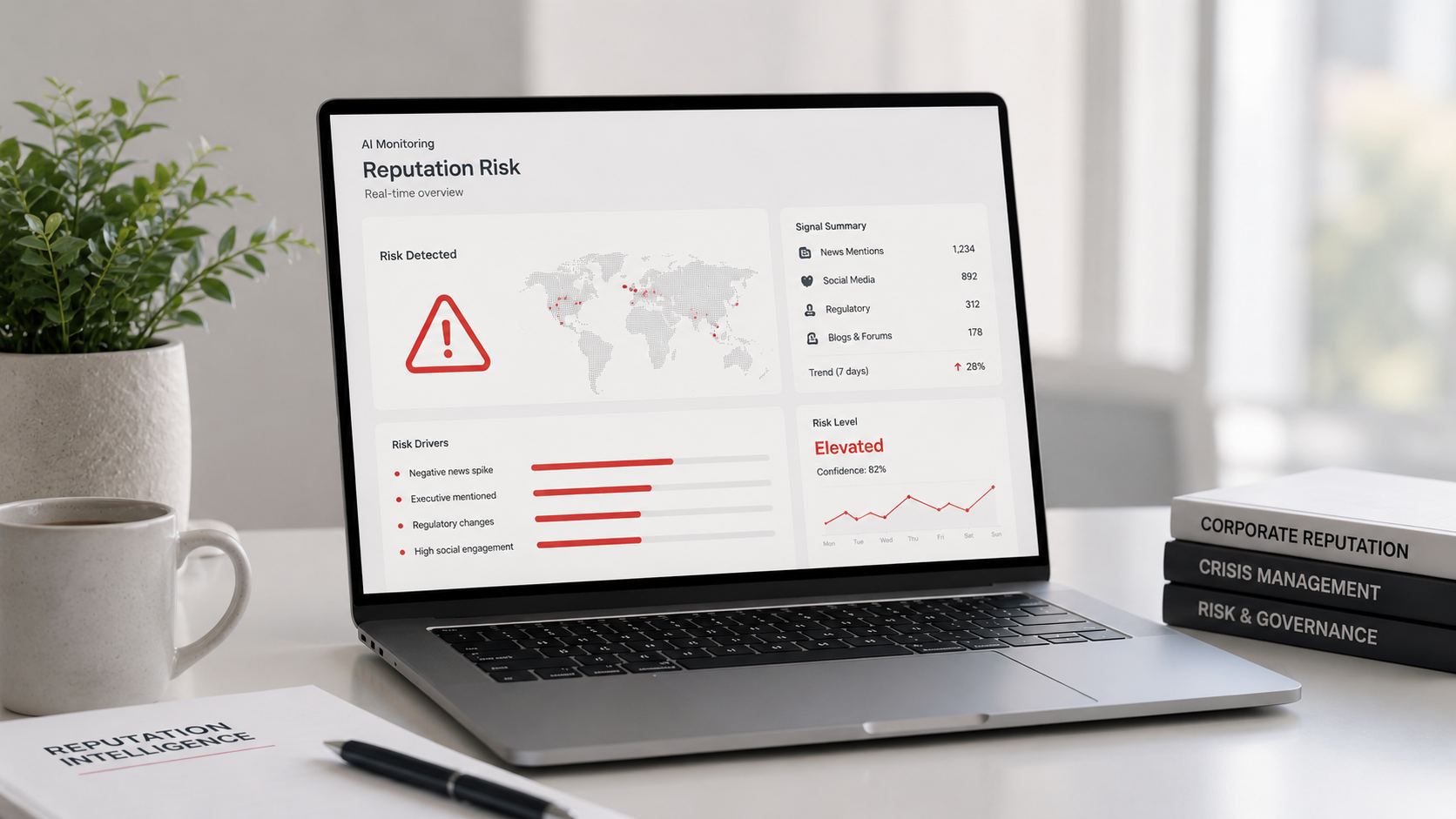
RH Detection, the monitoring layer of the Reputation House Risk Control Center, is a real-time reputation risk monitoring platform built around this: continuous detection across search, AI, media and social, and reviews — real-time risk signals and alerts, and an analyst layer that interprets them, so what arrives is prioritized risk, not a 24/7 stream of raw mentions.
Common Mistakes in Online Reputation Management
A consumer brand has real-time social alerts but checks search and online reviews weekly. A complaint posted Friday night climbs its branded search over the weekend and is cited by a prospect on Monday. The alerts worked — on the one surface they covered. Real-time on all four would have caught it before Monday.
See your real-time picture
Before committing to a 24/7 program, get a current snapshot of where your reputation stands.
Risk Check by Reputation House scans search, AI, media, and reviews — so you know what a monitoring service needs to cover before you choose one.Frequently Asked Questions



Kristina joined Reputation House in 2022 as Account Director and moved through Operations to become COO before being appointed CEO in 2026. She drove the company's shift from a reputation agency to a technology-driven digital risk management platform. Her expertise spans operational scaling, technological transformation, and international business development in the reputation and digital risk space.